

“It’s whatever the patient needs.” That’s how Stephanie Francis describes her work as a Mi’kmaw Indigenous Patient Navigator. She is one of six across the province’s four zones.
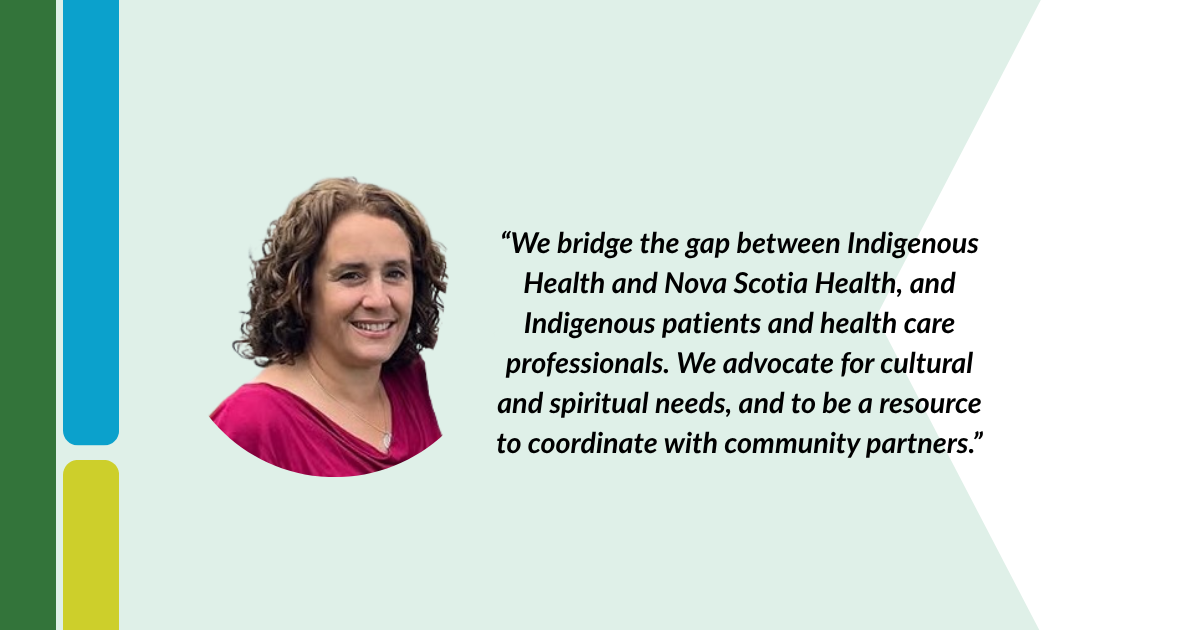
“We go in and we speak to the patients, introduce who we are and let them know that we are here to help support Indigenous patients who are accessing any health services within Nova Scotia Health,” says Stephanie. “We bridge the gap between Indigenous Health and Nova Scotia Health, and Indigenous patients and health care professionals. We advocate for cultural and spiritual needs, and to be a resource to coordinate with community partners.”
Stephanie, from Pictou Landing, has been in the health care sector for more than 25 years, beginning her career in Physiotherapy before becoming a Mi’kmaw Indigenous Patient Navigator in the Central Zone.
“When this job came up, I was excited because now I can help my community. I know the hospital, I have 25 years of health care experience, and I know my community”.
Stephanie and her colleagues work as connectors between the patient and Nova Scotia Health, existing outside of their medical care team, but still having the knowledge and experience to offer when needed.
“I like to explain when I first meet a patient that I haven’t gone into their chart yet, I don’t even know yet if the patient is going to want me there so I’m not going to go through their personal information. I want them to trust me; we’re a small community,” Stephanie explains. “I just want to introduce myself and give them my card to see if I can help them in any way. My priority is the patient first and foremost, and I know that my counterparts in all the zones feel the same way”.
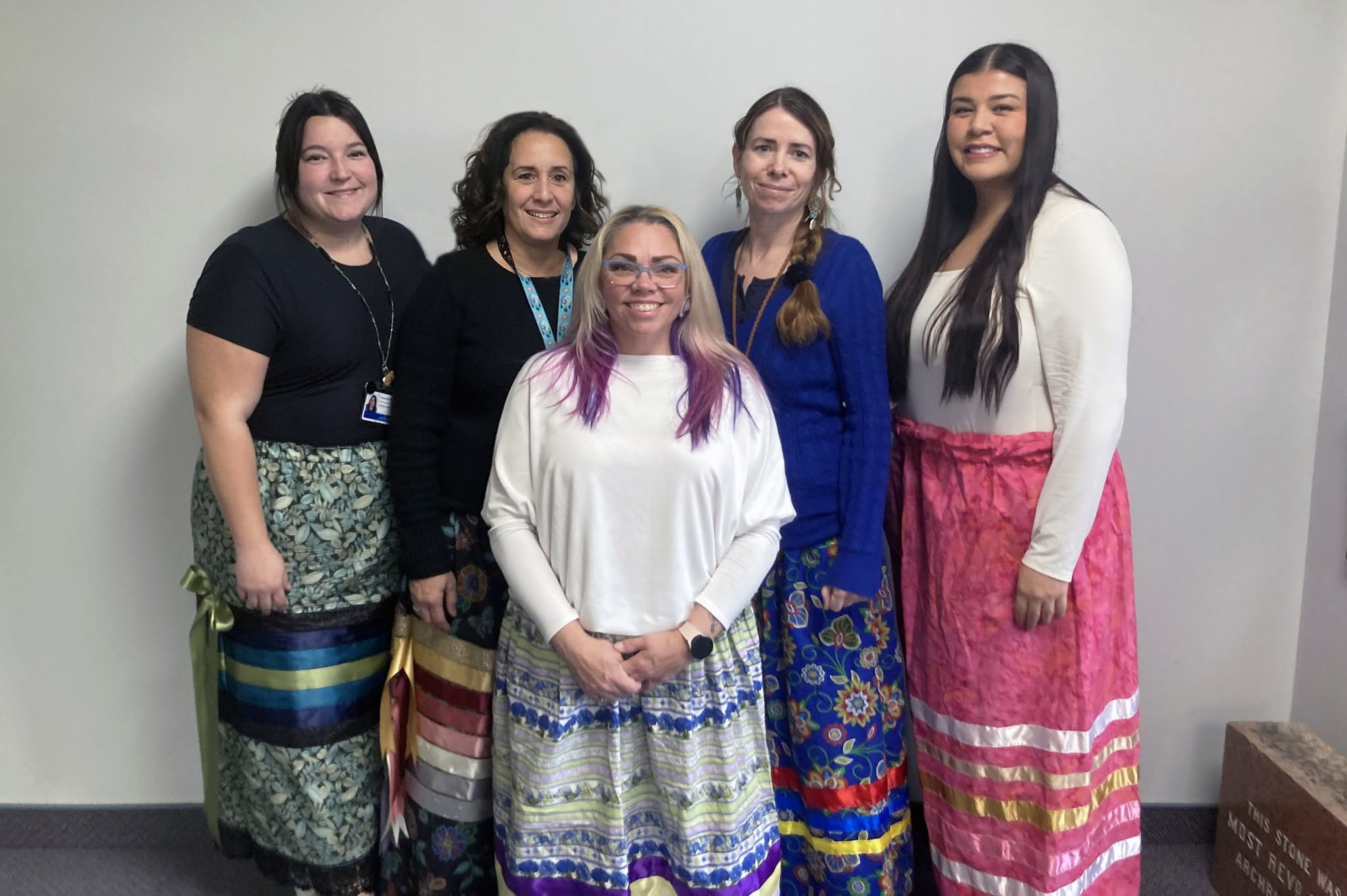
Photo of (L to R) Channelle Beaumont, Stephanie Francis, Jennifer Crossman, Jacquie Potvin-Boucher and Caitlin (Katie) Lameman (photo credit: NS Health)
Culturally competent care for Indigenous patients means many different things, including being able to take part in a Smudging Ceremony, where one or more medicines are gathered from the earth and burned. Smudging is a spiritual ceremony used for prayer, cleansing and healing of the mind, body, emotions, and spirit.
In 2024, the Dartmouth General Hospital Foundation helped purchase supplies for patients to complete a Smudging Ceremony while they are at DGH, something that has historically come with barriers.
“We met with maintenance and operations to say, okay, so this is the situation. If we have a patient, they can’t get outside, how do we make this work for them? They are Indigenous. Smudging is part of their health, their medicines. We brought in the smudge kit and actually did a smudge with them, and they were so lovely. So, for the kits that we have at Dartmouth General we have all the required actions that must take place to make it safe, and make sure the right people are aware. The Foundation helped with the kits and laminating all the procedure documents, they were great with that.”
Another big part of the MIPN is education, for patients and staff. Stephanie and her colleagues work with hospital staff to expand their knowledge of Indigenous culture and to help break down barriers for those accessing care. Stephanie holds ‘lunch and learn’ sessions with staff to expand their knowledge and be a resource that they can reach out to at any time.
“We’re here to assist Indigenous patients overcome barriers to timely and culturally safe care, which includes working with staff.”
Looking to the future, Stephanie would love to see Indigenous representation inside and outside of the hospital; artwork, statues, and Indigenous specific medicines, like birch, cedar, and sweetgrass.
Nova Scotia Health currently has six Mi’kmaw Indigenous Patient Navigators across the province’s four zones – Central, Eastern, Northern, and Western. To learn more about them, or to get in contact with someone from your zone, please visit https://www.nshealth.ca/clinics-programs-and-services/mikmaw-indigenous-patient-navigator-mipn