

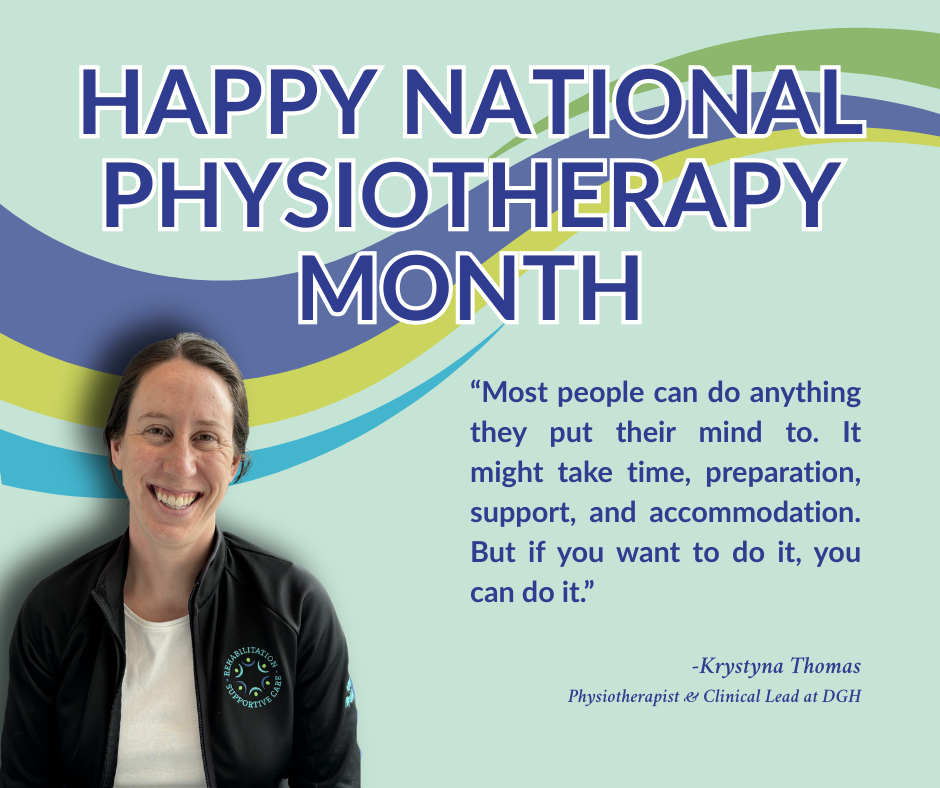
For Krystyna Thomas, physiotherapy is about the impact that the practice has on patients at every stage and level of their recovery experience.
Krystyna currently works in two roles at DGH; first as an interdisciplinary clinical lead for rehabilitation, and second as a physiotherapist. With more than 12 years of experience, she says her passion for physiotherapy started with a love of movement, healthcare, and problem-solving.
“I really like the puzzle of it,” she says. “Finding the root cause of an issue and helping people improve their lives feels like a good use of both my brain and body.”
Before joining DGH full-time in 2022, Krystyna spent seven years working in private practice. Today, her work is split between the ICU, medicine units, and leadership responsibilities within the rehabilitation team.
For her, no two days are ever the same, but teamwork is always at the centre of her profession. Her mornings begin with team huddles alongside occupational therapists, rehabilitation assistants, social workers, recreation therapists, nursing staff, and more, to coordinate patient care and prioritize patient needs.
In the ICU, Krystyna works closely with critically ill patients to help prevent mobility decline during hospitalization. Even patients connected to ventilators or other medical support equipment are encouraged to move whenever safe and possible.
“We know now that early mobility makes a huge difference,” she explains. “Helping patients stay active while they’re critically ill can improve recovery outcomes and quality of life long-term.”
There are many different types of people Krystyna sees on a daily basis, including those recovering from strokes, respiratory illnesses, fractures, surgeries, and other medical conditions that affect movement and independence for patients. One of the biggest misconceptions she encounters is that physiotherapy is “only for athletes or sports injuries.”
“It’s really for everyone,” she says. “If you have pain, mobility challenges, or difficulties with function, physiotherapy can help.”
One of the most rewarding parts of the career for Krystyna is getting to know her patients during vulnerable moments and helping them recognize their own progress.
“Sometimes it’s about helping someone see that even a small amount of improvement is still a huge step forward,” she says. “You may not be walking down the hallways yet, but maybe yesterday you couldn’t take two steps, and today you can. That’s what it’s about.”
She also emphasized the emotional and mental health benefits that can come with movement and rehabilitation. Helping patients regain their confidence, improve sleep, socialize, or simply get out of the bed, can have a significant impact on their overall well-being during their recovery period.
Over the course of her career, Krystyna says physiotherapy has continued to evolve, particularly in areas like concussion management and early mobility research. However, she believes the core principles remain the same in physical rehabilitation: movement, education, and connection.
“There’s something really important about human interaction and helping patients feel supported,” she explains.
Her advice to the community is simple: stay active in whatever way feels manageable and sustainable to your personal limits.
“You don’t have to love exercise; but try to find something you at least don’t hate,” she jokes.
And when it comes to recovery, rehabilitation, and reaching personal goals, Krystyna believes most people are capable of more than they realize.
“Most people can do anything they put their mind to,” she says. “It might take time, preparation, support, and accommodation. But if you want to do it, you can do it.”